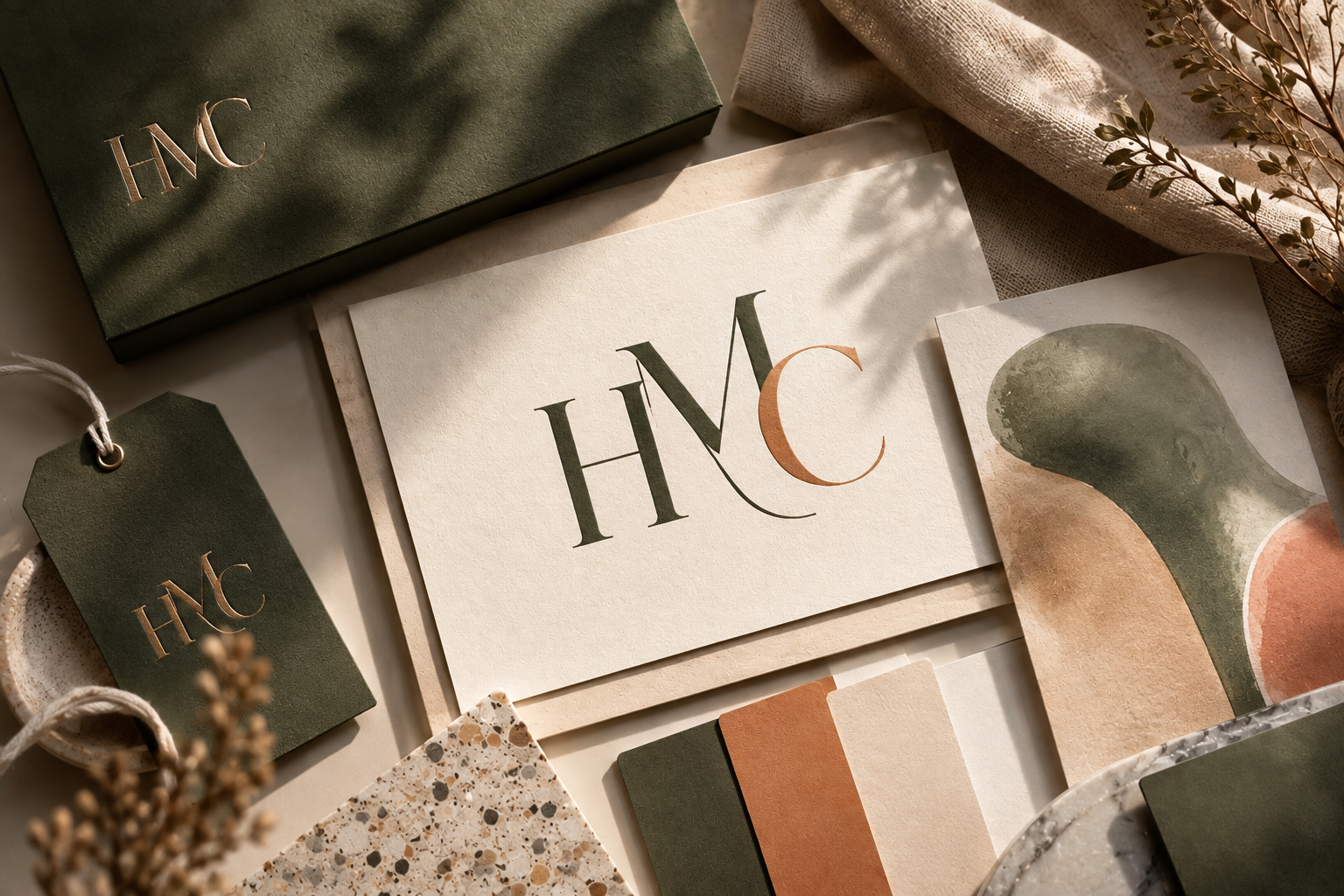
The rules of brand design have been rewritten. In 2026, the brands that stand out are not necessarily the ones with the most polished AI-generated visuals — they are the ones that feel unmistakably human. As artificial intelligence floods creative pipelines with endless visual possibilities, a counter-movement is reshaping visual identity: rawness, motion, personality, and emotional resonance are becoming the most powerful differentiators a brand can own.
The latest brand design trends 2026 reveal a clear shift away from perfectly polished, predictable aesthetics toward identities that move, evolve, and connect on a human level. From kinetic logos and expressive typography to hand-crafted imperfection, sonic branding, and human-directed AI, brands are finding new ways to remain distinctive in an increasingly automated creative landscape.
This post breaks down the definitive brand design trends 2026 and what they mean for businesses looking to build lasting brand equity in a world increasingly crowded with AI-generated sameness.
Why 2026 Is a Pivotal Year for Brand Identity
The brand design trends 2026 landscape is being reshaped by a powerful paradox: the tools designed to accelerate creativity are also making it harder for brands to stand out. As AI-generated images, copy, and campaigns become increasingly common, audiences are becoming more sensitive to content that feels generic, automated, or lacking in personality.
Recent consumer research points to a growing preference for transparency and human involvement. Many consumers say they can identify AI-generated content and consider human-created work more credible, while research from Pew Research Center shows that knowing whether content was created by a human or AI matters to a large majority of Americans.
The implications for branding are significant. When anyone can generate a polished logo, campaign visual, or social media graphic in seconds, polish alone is no longer a competitive advantage. Distinctive personality, consistency, emotional connection, and recognizable visual cues become far more valuable.
This shift is at the heart of the brand design trends 2026 landscape. Brands are experimenting with motion, expressive typography, tactile textures, imperfect details, sound, and flexible visual systems to create identities that feel more memorable and unmistakably their own.
The question is no longer, “Can AI help us design faster?”
It is:
“Does our brand still feel like us?”
8 Brand Design Trends Dominating 2026
The brand design trends 2026 landscape is moving beyond static visuals. Brands are creating identities that move, react, adapt, and communicate across increasingly dynamic digital environments.
1. Motion-First Brand Identities
Static logos are no longer enough. One of the defining brand design trends 2026 is the shift toward motion-first identities, where movement becomes as fundamental to a brand’s visual system as its colour palette or typeface. With screens dominating nearly every brand touchpoint — from social media and digital out-of-home advertising to apps and wearables — kinetic identity has evolved from a novelty into a necessity.
What this looks like in practice:
- Animated logos that breathe, transform, and adapt to context
- Motion-led UI behaviour tied to brand personality
- Kinetic typography that communicates tone, energy, and pace
- Dynamic visual systems that respond to environment, time, or user interaction
Leading agencies are increasingly developing motion briefs alongside traditional brand guidelines. The question is no longer simply, “What does your brand look like?” but rather, “How does your brand move?”
For brands competing in an increasingly dynamic digital landscape, a visual identity without a motion strategy may feel incomplete. Motion is no longer just an enhancement — it is becoming part of how audiences recognize, experience, and remember a brand.
2. Hand-Crafted Imperfection as an Authenticity Signal
As AI-generated imagery becomes more polished, accessible, and ubiquitous, brands are deliberately moving in the opposite direction. Visible imperfection — grain overlays, brush strokes, uneven lines, handwritten elements, and scrapbook-style layouts — is emerging as a powerful visual signal of human authorship.
This is one of the defining brand design trends 2026, as brands look for ways to create visual identities that feel personal rather than algorithmically produced. Zine culture, DIY aesthetics, and collage-inspired design are increasingly influencing contemporary branding, giving businesses a way to stand apart from the sea of perfectly rendered AI visuals.
The strategic logic is simple: when perfection becomes easy to generate, imperfection becomes distinctive. It communicates that real people were involved in creating the brand.
Design characteristics to watch:
- Subtle grain and texture overlays
- Hand-drawn shapes, illustrations, and lettering
- Layered mixed media combining photos, doodles, stamps, and brush textures
- Raw, unpolished layouts with an editorial feel
- Organic shapes and intentionally irregular elements
This isn’t nostalgia for its own sake — it’s a calculated response to a market where audiences are becoming increasingly familiar with algorithmic content. Brands are using tactile, imperfect details to create identities that feel more human, memorable, and authentic.
Research from The Wits Lab similarly argues that the growing flood of AI-generated content is pushing brands toward more authentic human voices and creative expression.
3. Expressive Typography as the Hero of Brand Identity
Typography has graduated from a supporting role to a brand centrepiece. In saturated markets where logos can begin to blur together, a distinctive typeface can become one of the most recognisable visual assets a brand owns.
Among the most important brand design trends 2026 is the rise of bespoke letterforms and expressive typographic systems — where typography is no longer simply a vehicle for words but an expression of brand personality in its own right.
What’s driving the trend:
- Custom typefaces that competitors cannot easily replicate with an off-the-shelf font
- Playful character shapes and experimental letterforms
- Typographic logos and wordmarks with built-in personality
- Variable and responsive typography that adapts across digital environments
- Mixed type styles that prioritise expression without sacrificing usability
The goal isn’t simply to choose a more unusual font. It’s to make typography an integral part of the brand’s identity — something audiences can recognise even before they see the logo.
Brands willing to invest in distinctive typography are building a visual moat that AI commoditisation cannot easily cross. When anyone can generate polished imagery in seconds, a recognisable typographic voice becomes a powerful source of differentiation.
4. Humanised Hybrid Intelligence in Design
The most sophisticated design teams in 2026 aren’t choosing between AI and human creativity — they’re orchestrating both. Humanised Hybrid Intelligence describes an approach where generative AI handles speed, scale, and iteration, while human designers provide judgment, emotional nuance, cultural awareness, and strategic intent.
This is becoming one of the defining brand design trends 2026: using AI to expand creative possibilities without allowing automation to erase the personality behind the brand.
The result is a new generation of brand experiences that feel warm, distinctive, and intentional rather than robotic or generic.
How leading brands are using it:
- AI for rapid ideation, exploration, and asset variation
- Human oversight for final creative direction and emotional calibration
- Soft-glow gradients, organic shapes, and tactile elements to introduce warmth into digital interfaces
- Conversational and empathetic language in AI-powered product experiences
- Human review to ensure AI-generated assets remain consistent with brand values and visual identity
The brands winning in 2026 aren’t necessarily the ones using AI the most. They’re the ones using it most intelligently — treating AI as a creative collaborator rather than a replacement for human judgment.
The principle is simple: let AI accelerate the process, but keep humans at the centre of the brand.
5. Soft-Glow Gradients and Cinematic Depth
One of the standout brand design trends 2026 is the return of gradients — but they’re nothing like the harsh neons that dominated digital design in the late 2010s. In 2026, gradients are becoming more atmospheric, moody, and cinematic. Think deep fades, smoky colour transitions, and ambient light-inspired glows that add depth without overwhelming the composition.
As part of the brand design trends 2026 landscape, this softer approach reflects a broader shift toward visual experiences that feel immersive and emotionally engaging rather than purely functional.
These gradients work because they evoke emotion without shouting. They give interfaces, campaigns, and brand materials a sense of feeling — something that ultra-flat, minimalist design can sometimes struggle to deliver.
Visual traits defining this trend:
- Smooth, slow-blending colour transitions
- Deep midnight tones fading into soft pastel shades
- UI elements that appear lit from within, similar to light passing through frosted glass
- Subtle atmospheric warmth replacing intense neon brightness
- Layered lighting effects that create depth and dimension
Soft-glow gradients pair especially well with imperfection and tactile texture. Combining atmospheric colour with grain, organic shapes, and handcrafted details can create visual systems that feel both premium and human.
The result is branding with depth — not just something that looks polished on a screen, but something that creates a distinct emotional atmosphere.
6. Nostalgic Layering and Retro-Futurism
One of the most commercially interesting aesthetics of 2026 is also one of the most complex: multi-era nostalgic layering. Designers are blending Y2K shine, 90s grunge, 80s neon, and 70s warmth with sleek modern forms, creating visual languages that feel both familiar and fresh.
This isn’t simply nostalgia for nostalgia’s sake. Brands are using familiar visual references to trigger emotional connections while introducing enough contemporary design language to keep the result relevant.
Think VHS grain paired with modern typography. High-tech precision layered over lo-fi imperfections. Medieval-inspired letterforms colliding with futuristic digital effects — a micro-trend sometimes described as “Future Medieval.”
The brands doing this well aren’t choosing a random decade and running with it. They’re examining their target audiences and selecting nostalgic references that connect with specific cultural memories, then combining them with modern typography, layouts, motion, and technology.
The result is branding that feels recognizable without looking dated — a balance that makes nostalgia one of the more versatile brand design trends 2026 has produced.
7. Inclusive and Accessible Brand Identity
Accessibility has moved from a compliance checkbox to a core creative consideration in 2026. Forward-thinking brands are designing for a broader spectrum of human experiences from the beginning rather than treating accessibility as something to retrofit after the identity is finished.
Key principles include:
- Strong colour contrast, with WCAG AA as a practical baseline where applicable
- Typefaces selected for legibility across different visual conditions
- Packaging and interfaces designed for clarity and ease of use
- Clear hierarchy, spacing, and navigation across digital experiences
- Accessibility treated as part of the brand experience rather than simply a legal requirement
Inclusive design doesn’t have to mean sacrificing aesthetics. In fact, thoughtful accessibility can create cleaner, clearer, and more usable brand systems.
Brands that make accessibility part of their creative strategy can reach wider audiences while demonstrating that their identity is designed for real people — not an idealised user.
Accessibility is increasingly becoming a competitive advantage, not a constraint.
8. Multisensory and Sonic Branding
Visual identity alone can no longer carry the entire brand experience. As interactions increasingly happen through devices where screens are secondary — from earbuds and smart speakers to wearables and emerging spatial interfaces — sound and haptics are becoming valuable brand assets.
Sonic logos are already established as powerful recognition tools, with Netflix’s iconic “ta-dum” serving as one of the best-known examples. In 2026, more brands are thinking beyond a single audio signature and developing broader sonic systems that can work across products, advertising, apps, and physical experiences.
Haptic feedback is also emerging as another potential brand touchpoint, particularly in mobile and wearable experiences where subtle vibrations can reinforce actions and interactions.
Why this matters now:
- More brand interactions are happening partially or entirely off-screen
- Short audio cues can create immediate recognition and emotional association
- Sound can reinforce personality in ways visual assets cannot
- Multisensory systems create greater consistency across fragmented devices and touchpoints
The next generation of brand identity isn’t limited to what people see. It encompasses what they hear, feel, and experience.
If your brand has a strong visual identity but no sonic or multisensory strategy, you’re defining only part of the experience.
The Through-Line: Conviction Over Aesthetics
Across all eight trends, one strategic truth emerges: in 2026, AI has commoditised aesthetics. Beautiful visuals are no longer scarce. What remains scarce — and therefore valuable — is a brand with genuine conviction about what it stands for, discipline about what it is not, and the creative judgment to express both consistently.
As Threerooms’ deep-dive into brand identity trends for 2026 highlights, the future of brand identity is dynamic, inclusive, textural, and deeply emotive. The most memorable brands will be those that design with intention — balancing technological innovation with humanity, and visual impact with accessibility.
That’s the central lesson behind the brand design trends 2026 landscape: differentiation is no longer about producing more polished visuals. It’s about creating a brand that has a recognizable point of view.
The brands that will win aren’t necessarily the most AI-assisted. They’re the most distinctly, unmistakably themselves.
What This Means for Your Brand Right Now
Whether you’re building a brand from scratch or evolving an existing identity, 2026 demands a hard audit of how your brand behaves, feels, and communicates.
Ask yourself:
- Does your brand have a motion strategy, or are you still relying primarily on static assets?
- Does your visual identity signal human authorship, or does it feel algorithmically generic?
- Do you have a sonic identity, or is your brand invisible to the ears?
- Is accessibility built into your brand brief, or treated as an afterthought?
- Can your typography and visual system remain distinctive in a world where AI can replicate basic design overnight?
- Does your brand have a clear point of view that goes beyond aesthetics?
The brands that can answer these questions with clarity — and act on the answers with conviction — are the ones most likely to build lasting recognition and define their categories for years to come.
Key Takeaways
- Authenticity is becoming a competitive advantage. As AI-generated content becomes increasingly common, human character and distinctive creative direction become more valuable.
- Motion-first design is transforming brand identity in 2026, making movement an increasingly important part of how brands are recognized across digital touchpoints.
- Hand-crafted imperfection is a deliberate design strategy, not a limitation — it can signal human authorship in an increasingly automated creative landscape.
- Expressive typography, soft-glow gradients, and nostalgic layering are giving brands new ways to build distinctive visual personalities.
- Inclusive and accessible design is moving from a compliance consideration to a core part of the brand experience.
- Sonic and multisensory branding are expanding identity beyond what audiences see to what they hear and feel.
- Humanised hybrid AI is emerging as a powerful creative model, using AI for speed and exploration while keeping human judgment at the centre.
- Above all, the winning brands of 2026 will be those that use technology without losing their personality, purpose, and point of view.